AI and the Future of Social Care: Will AI Replace Care Workers?
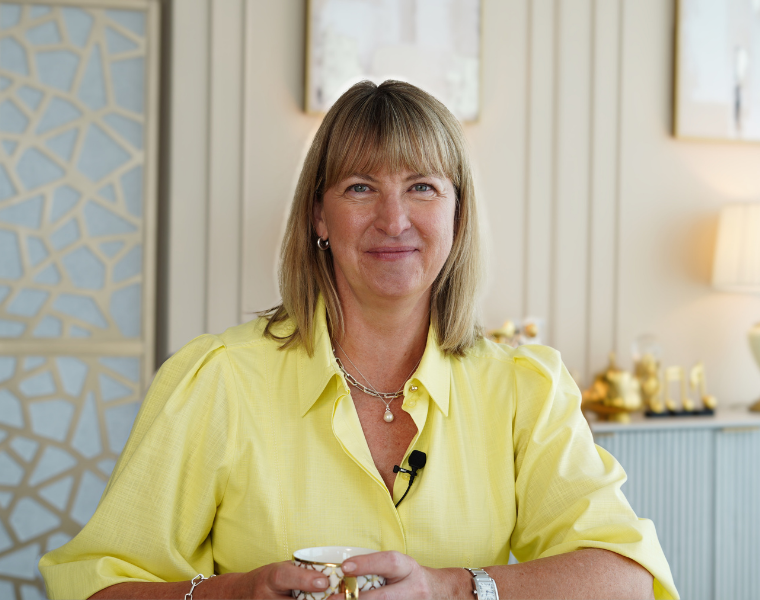
We sit down with Valerie Michie, Chief Executive Officer at Choice Care, to talk about the future of social care, technology and AI.
Are care roles are at risk of being replaced by AI?
“I truly believe that care is one of the most future-proof careers there is. AI and technology are already changing and impacting many sectors and will continue to do so. However, when it comes to care and caring, there will always be a fundamental need for human connection and compassion.
It’s understandable that people working in care may be asking themselves: “Is my job as a Social Care Worker going to be replaced by AI?” but I genuinely don’t believe it will. If anything, I think technology will help us to do our jobs better, while the human connection at the heart of care remains irreplaceable.
I recently read an article that introduced an idea I found really interesting. It suggested that five or ten years ago, we might have encouraged young people to pursue education and learn to code in order to prepare themselves for the future. Today, however, the mantra is changing: ‘learn to care.’
Caring really is the profession of the future, and that’s something I can completely get on board with. It’s a career that offers purpose, meaning and remarkable resilience in the face of rapid technological change – and one that can be a fantastic choice, whatever your age or stage of life.”
Why can’t technology replace the human side of care?
“The work our colleagues do is incredibly expert and specialised. While AI can increasingly replicate aspects of many roles, you cannot programme an AI system to truly know someone over a long period of time. Our colleagues build that knowledge and understanding through relationships. They can often tell, simply by looking at someone and observing what’s going on, that something is different and anticipate what might be best for the people we support.
That’s why the question “Will AI replace care workers?” is so important. Care is about far more than completing a task or following a process. It’s about knowing the person, understanding their individual needs and recognising the subtle changes that technology alone may not see.”
“It’s such a special relationship: reading the room, the person and the environment. These are deeply human skills, rooted in empathy, intuition and genuine connection.”
Where do you see technology and AI genuinely adding value in social care?
“We have been rolling out a lot of really helpful digital tools across Choice Care in the last few years and there’s been some exciting developments in technology. Let me give some examples of what I’m really excited about…
We’ve been working on integrating the PainChek app with our Nourish platform. This app is a double check on somebody who may not be able to express themselves verbally and it can identify, through facial muscles, when people might be in pain that we otherwise might not be able to know.
We’ve also been trialling different types of sensor technologies which flag up, for example, when someone we support is disturbed in the night. Previously, colleagues would need to open the door to check, which could of course wake the person and further disrupt their sleep. Similarly, if we just need to make sure that somebody’s safe when they’re out and about and give them a bit more sort of space, sensor technologies are super for that kind of thing.
We’ve also been using digital tools that are tailored to the way people we support want to communicate and engage. In the past, we might have used a simple laminated set of pictures that someone could point to. Now, that same support can be available digitally, perhaps through a phone or tablet. We can also support people to socialise and connect online, opening up lots of different ways to communicate, engage and participate through digital technology.”
Do you think that technology could give care colleagues more time to focus on what really matters, i.e. caring?
“Yes, absolutely. When I started at Choice Care, I would talk to colleagues and say, ‘what’s working, what’s not working, what could we do more of, what could we do less of?’
It was interesting because – particularly for those colleagues who had recently joined us – they would say: ‘why are we writing things down on bits of paper? Isn’t it quicker to be recording things digitally?’ So, we now have a digital care recording solution rolled out across all our sites!
I think there’s lots of potential for technology to free up time. One of the very complicated and time consuming – but vital – things our colleagues do, is putting together Care Plans for the people we support. These documents look at how people are best supported and can end up being lengthy. Somebody may have varied support and health needs and we always want to make sure that they are being supported safely and in a way that works for them, so we cover lots of detail to ensure that colleagues have access to everything they need to know.
We’re currently rolling out a tool that runs AI over Care Plans and pulls out important information for colleagues about the people we support. For example, someone might have a risk of epilepsy mentioned further down in their Care Plan, but it hasn’t been picked up in the summary or background information at the start. This tool will highlight key carer information and make the document easier to read. It’s a bit like having an expert friend looking over the whole thing and saying: ‘What about this? Have you thought about that?’ I know writing Care Plans are a big – and important – task and, when they were on paper, they were huge documents. So, I think using AI in these kinds of ways is all about making people’s lives easier and freeing up time.”
How do you see the roles and skills needed in care changing as technology develops?
“Care, I think, will increasingly offer more and more for people looking for a rewarding role. As we use more technology, people in traditional care roles will be given the support to develop new digital skills with confidence, even though the core of the job is absolutely going to remain supporting people.
At the same time, technology is creating entirely new roles within care, from digital trainers to analysts looking at data and identifying trends. Leading to a greater variety in the skills need for roles within the care sector, and opportunities for people with different interests and strengths.
But while the roles and skills may change, there will always be a fundamental need for people who want to work with and support others.”
Looking ahead, what excites you most about the role technology could play in the future of social care?
“I think technology and digital is an area we should be really, really proud of and I like the fact that we’re at the forefront of these changes.”
“At Choice, we’re using tools like Nourish and PainChek on a daily basis, and I think we can sometimes take for granted the impact they have on the care we’re able to deliver. In social care, we’ve actually leapfrogged quite quickly into user-friendly, practical tools that can make a real difference.
We work strategically with technology partners and when they’re looking at developing new things, they’ll say to us, do you want to look into this more with us? Having that opportunity helps us make sure what we’re doing is best suited to our work.”
Do you think social care is working well with technology?
“I’m really encouraged by how people have adapted to technology at Choice Care, although of course it’s not all been straightforward. I know many of my colleagues were apprehensive about giving up paper as they were really familiar with this – but people have been so open to trying new technology as they see it complements their work.
I had a family member who was in hospital recently and it really brought home to me how far we’ve come in social care when it comes to using technology to support people.
There’s still lots we can continue to do to make the work easier for colleagues and also enhance care for the people that we’re supporting.
I’m really excited for the impact this technology could bring to other areas of care.”
What have you seen at Choice Care that gives you hope that technology can enhance care?
“One of our key priorities is to deeply understand what matters most to the people we support. I think our potential to use technology to build an even richer picture of each person we support is really exciting.
For example, through GP Connect, we can now see people’s GP records, which gives us a much better understanding of people’s health needs and is enhancing the care we give.
By using technology to bring together all of the information we have about the person we’re supporting has also helped us find opportunities for them to do the things they love. So, if someone is interested in gardening, for example, we can identify a gardening club down the road or perhaps notice that they haven’t had their dentist check-up for a while, we can get their appointment booked. It’s about using technology to put all the pieces of the puzzle together, so we can help people thrive and live the life they want to lead.
Essentially, I think the less time we can spend on sitting at a table, writing, and the more we can use digital tools, we’re able to increase the time that we’re spending on care. So, I think technology is just going to make care better and better – it’s a huge positive for us!”
Learn more
Good days, bad days and everything in between. Our support is built around the people who draw on our care.